1 Royal Park Drive
Suite #3
Zeeland, MI 49464
616 748 1700 P
616 748 1900 F
whatwedo.jpg

Recipes

Cargill Recipe Competition

Creative Dining chefs have been putting their creative skills to the test for the Fontina “Bringing Passion to Your Menu” recipe contest.  The competition was sponsored by Cargill, the company that owns Fontina sauces, and administered by local food broker Michaels and Associates under the direction of Kevin Vander Meer [2011 Greater Grand Rapids ACF Chef of the Year] and CDS account representative Reny Thrall.

Over thirty recipes were submitted, all of which incorporated Fontina’s new Tempo sauces.  These nine new sauces include delicious flavors such as Kentucky Bourbon, Parmesan Garlic, and Honey Chipotle.  All of the recipes will be compiled in a book and distributed to CDS accounts for all of our clients to enjoy!

The top three prizewinners each received a Best Buy gift card.  Cargill will feature the winning recipe at the GFS food show this spring.  The winning chefs and recipes were:


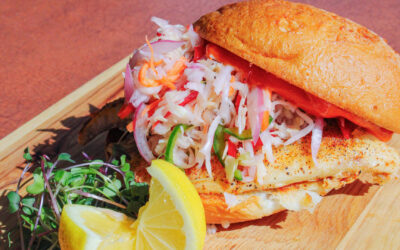
3rd place – Ben Mokma of Hope College/Haworth Inn and Conference Center – Asian Ginger Glazed Salmon Sliders

2nd place – Ian Ramirez of Calvin College – Chicken Bulgogi Yakitori

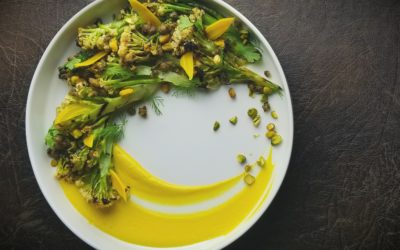
1st place – Tom Hoover of Hope College – Pork Churrasco with Maque Choux


Check out Tom’s winning recipe, followed by photos of the top three dishes:


Pork Churrasco

Serves 6

Vegetable oil – 1 C

Smoked Paprika – 2 T

Fontina Sweet Habanero Sauce – 5 T

Garlic, minced – 2 T

Rosemary – 2 T

Thyme – 2 T

Salt – 2 T

Black pepper – 2 t

Pork tenderloin, trimmed – 2 lbs


  1. Combine oil and smoked paprika in a small pan.  Cook over medium heat for 5 min.  Whisk occasionally.  Cool to room temperature.
  2. Pour oil infusion into blender.  Add garlic, thyme, rosemary, habanero sauce, salt, and pepper.  Blend until herbs are minced fine.  Reserve.
  3. Cut each tenderloin into 2” thick medallions.  Flatten each between sheets of plastic wrap to ¼” thickness.
  4. Place cutlets in a shallow pan and cover with the marinade, making sure to coat the cutlets completely.  Chill covered for 6 to 8 hours.
  5. Pre-heat a broiler, gas grill or salamander.  Scrape off most of the marinade from the cutlets.
  6. Grill cutlets until just cooked through, about 2 minutes per side.
  7. Brush each side with a small amount of sweet habanero sauce.  Serve immediately.


Maque Choux

Serves 6

Butter – 2 T

Red onion, diced fine – 1 C

Red bell pepper, diced fine – ½ C

Corn, fresh-cut from cob – 2 C

Heavy cream – ¾ C

Thyme – 1 t

Fontina Honey Chipotle Sauce – 3 T

Green onion, chopped fine – 1 stalk

Parsley, chopped fine – 1 T

Basil, chopped fine – 1 T

Salt and pepper to taste

Tabasco sauce to taste


  1. Melt butter in a non-stick skillet over medium heat.  Add onion and sauté until translucent, about 5 minutes.
  2. Add bell pepper and sauté for 3 minutes.
  3. Add corn and sauté for 2 minutes.
  4. Add cream, thyme, and honey chipotle sauce.  Simmer until the sauce thickens.
  5. Mix in green onion, parsley and basil.
  6. Add salt, pepper, and Tabasco to taste.  Serve immediately.

Pork Churrasco with Maque Choux

Chicken Bulgogi Yakitori

Asian Ginger Glazed Salmon Sliders

Congratulations to Ben, Ian, and Tom!  We look forward to seeing (and eating!) all of the contestants’ recipes in the kitchens of CDS accounts everywhere!


Inquiring Minds – Interview #7

Creative Dining Services’ Inquiring Minds interviewed Kristeen Vander Wall, Receptionist and Office Assistant at Creative Dining Services home office. Here’s what we learned about:

[Creative Dining Services’ Inquiring Minds]: So, you are the Receptionist at Creative Dining Services. What is your favorite part of your job?

[Kristeen Vander Wall]: Since my start in June, I’ve been enjoying the fun (sometimes feisty) environment and being able to help the staff with various tasks.

[CDSIM]: Our readers would like to know: what is your favorite cuisine?

[KV]: Well, what goes with Mountain Dew? On a more practical level: anything Italian. For my birthday, my husband prepared me a wonderful and delicious dish of spaghetti. It was amazing!

[CDSIM]: If I take a look inside your refrigerator what would I find?

[KV]: Hmmm, depends on what is on sale that week. The must haves are: milk, eggs, cheese and Mountain Dew.

[CDSIM]: If you could vacation anywhere in the world, where would you go?

[KV]: Throughout my schooling, I took 5 years of French and I minored in Greek so, I would love to travel somewhere that I could put those languages to use. Paris? Greece? Yes please!

[CDSIM]: And finally, how will you handle your new-found fame once this interview is published on the Creative Dining Blog?

[KV]: Let’s just say, I will autograph anything you’d like, but it’s going to cost you!

____________________________________

Seeing that we are a culinarily-focused company, Kristeen has agreed to share her recipe for Guilt Free Spinach Dip.  Here’s what she has to say about it:

“We all know that holidays are a good time for packing on the pounds. All the delicious goodies and treats that are readily available for the taking at family gatherings and get-togethers, who can resist? This past Independence Day I did a pretty nice job of turning down the extras – I felt satisfied after the long holiday weekend. However, the week following, my husband’s family and I went camping up north to Mackinaw City. This meant a deadly combination: Mackinac Island Fudge and Happy Hour. You see, our family has a long running camping tradition that every day from 4 to 6 we bust out the snacks and treats, then we sit back and indulge. It’s a great tradition. Those couple hours are heavenly. Much to my surprise, we mostly ate healthy (besides my contribution of white-chocolate covered peanut butter balls). My favorite recipe of the week was the Guilt-free Greek Spinach Dip. Try out this delicious and easy recipe if you are looking for a great dish to pass at a party or just needing something to nibble on. You won’t regret it!”

Guilt-free Greek Spinach Dip

 Makes 4 Cups

Prep Time: 10 Minutes

Chill Time: 2 Hours (for best taste)

Ingredients:

1 Dried vegetable soup mix

1 Container (16 oz) nonfat Greek yogurt

1 Cup low-fat mayonnaise

¼ Cup diced red onion

1 package (10 oz) frozen spinach, thawed and squeezed dry

1/3 Cup thinly sliced green onions


Directions:

1. In a medium bowl, combine vegetable mix, yogurt and mayonnaise until smooth. Seed and dice tomatoes.

2. Gently stir in tomatoes, red onion and green onions into yogurt mixture.

3. Cover and chill for 2 (or more) hours. Serve with sliced veggies of your choosing, or my personal favorite: Pretzels or Pecan Nut Thins.

4. Indulge, I mean, Enjoy!


The Greatest Journey: No Hospitality for the Light of the World

In Mexico they have a wonderful holiday tradition called Posada, which commemorates the journey that Mary and Joseph took to Bethlehem where Jesus was born. Each home in a neighborhood will have a Nativity or manger scene in their house. The local church will choose three homes to represent innkeepers in Bethlehem and four teen-aged children in the parish are given the honor to represent Mary and Joseph. These children will carry small statues of Joseph leading a donkey upon which Mary is riding side-saddle. On the chosen night, usually during novena or nine days before the 24th, a candle-lit procession consisting of adults and children called Peregrinos, lead by a person carrying a small paper lantern called a farlito, will wind through the neighborhood visiting each of the three houses in turn. The teens carrying the statues and the participants in the procession visit each house singing a simple chant each time, but it is only the third house that takes Mary and Joseph in. At this point all of the peregrinos enter the house and kneel before the crèche to pray the Rosary. The Rosary is a traditional Catholic prayer cycle said at important times during the religious year. Traditional Christmas hymns are also sung including in particular, O Holy Night. Once the Rosary is said, and songs sung, it is time for the children amongst the peregrinos to celebrate Jesus’ birth with a joyful party, which includes food, more music and a piñata.

I’ve always loved the story of Joseph and Mary’s great journey and over the years I’ve seen it as a metaphor for many things in my life. When things have been dark I’ve remembered the posada and its example of just how far determination and faith can move a person in this world. It’s certainly gotten me a long way, that’s for sure. And at the risk of spinning a silly, inappropriately parallel comparison, I sometimes see myself as being a tiny bit like that sole innkeeper who gave shelter to a desperate, fearful couple in the middle of the night two thousand years ago. That innkeeper is the hero in the Greatest Hospitality Story Ever Told. If we in this industry knew that person’s name, it would over-shadow every famous name in our business like the moon eclipsing the sun.

The story of Jesus’ birth resonates for all people around the globe, and I have always particularly liked the innkeeper part, because in my small way, I have at times been in that guy’s position. And I like to think that like him, I have made the right decisions and helped make someone’s life a little easier, a little brighter and maybe even, memorable. Of course – in that old innkeeper’s case – he done good. Really, really good. However, the one thing I’ve never liked about the story of the innkeeper is how the Bible says he took pity upon Mary and Joseph. Now I’m no theologian and I hesitate to contradict biblical teaching, but I know a thing or two about hospitality management and I prefer to think that that innkeeper of Bethlehem wasn’t giving them shelter out of pity, but out of a hospitality veteran’s deep sense of duty to help customers in need. Call me crazy, call me a heretic, call me just plain dumb, but I feel I can spot a finesse move by a hospitality professional a mile away and that innkeeper made a move that shrinks all the moves Michael Jordan ever made to a point smaller than the period at the end of this ridiculously, over-blown literary allusion.

Something else I’ve always wondered about the night Jesus was born was if Mary or Joseph had anything to eat or drink while awaiting their Son’s birth. Surely, the innkeeper would have offered them something, however meager it may have been. I like to imagine, since they were in the Middle East, that they might have kept the food light with some nice pita with baba ganoush. And I imagine a little more and in keeping with traditional fare served during the time of Posada in Mexico, maybe Joseph and Mary wolfed down a tamale. Then again, probably not. Sometimes I imagine too far and Mary was after all, in labor and not into eating anything. And as all fathers know, a woman in labor is a force of nature not to be trifled with, so it’s very likely that Joseph didn’t eat either. Anyway, regardless of my over heated imaginings, in celebration of the season, here are two recipes I’ve picked up along the way traveling through life on my own personal posada, Happy Holidays and Merry Christmas….

Baba Ganoush

Baba Ganoush

2 medium eggplants, about 1-1/2 pounds total
1/4 cup fresh-squeezed lemon juice
1/4 cup tahini
Salt and freshly ground black pepper to taste
3 Tablespoons olive oil
1/4 cup chopped fresh parsley
3 olives for garnish
Warmed chunks of pita bread for serving

Preheat oven to 450° F.  Prick eggplants with a fork. Arrange on non-stick cooking sheet and bake until tender and collapsed, 30 to 40 minutes. Allow to cool for 10 minutes. Cut each eggplant in half lengthwise and scoop out the flesh. Place flesh in a food processor with a metal blade and process until smooth. If you prefer to mash by hand, use a fork or potato masher.  Add lemon juice, tahini, garlic and salt and pepper to taste and process (or mash) until well blended. Slowly add 3 tablespoons olive oil until mixture is creamy.  Chill for at least two hours.  Serve in a shallow bowl. Drizzle olive oil over top, sprinkle with parsley and garnish with olives.

Tamale

Jesus’ (really) 60 Minute Chicken Tamales

Ingredients

6 cups Maseca Corn Masa mix for tamales
6 cups Chicken broth
1 cup corn or other vegetable oil (corn will enhance the flavor)
2 teaspoon salt
1 teaspoon baking powder
2 large rotisserie chicken
2 1/2 12 oz jars green tomatillo sauce
1 bag corn husks

Instructions

Soak the corn husks in warm water until soft.

Using an electric mixer, blend the masa flour (Maseca for Tamales), corn oil, salt, baking powder and the chicken broth to obtain a consistent mixture.

Shred the chicken and marinate in the green salsa or tomatillo sauce.

Spread masa evenly over corn husks, and spread a spoonful of marinated chicken on top of the masa.

Fold the sides of the corn husk to center over the masa so that they overlap to make along package.Fold the empty part of the husk under so that it rest against the side of the tamale with a seam.

Place the tamales in a steamer and cook tamales for 35-40 minutes. Check every 20 minutes.The tamale is cooked when it separates easily from the corn husk

The Hoover Holiday Table: the Family’s History in Food

Chef Tom Hoover in Japan as a young child

Thanksgiving is celebrated in two ways. The family gathers together and the family eats…and eats…then sleeps a little…then eats some more. Most folks will include the usual suspects in the Thanksgiving feasting – turkey, mashed potatoes, gravy, and dressing. From this point each individual family plugs in the family favorites, which could be anything from yams and marshmallows to venison salami . My family is no different. Although, I will say our Thanksgiving table can get a little more eclectic than most. My father was a career military man having served nearly 30 years as an intelligence officer in the Army. Hence we lived all over the world spending the bulk of our time in Japan and South Korea. Along the way my mother and sisters picked up an array of recipes and techniques which they folded into their repertoire of cooking. This repertoire was already bulging with cooking knowledge that included a heavy amount of down home Hoosier cooking from Indiana, some staples of Pennsylvania Dutch cuisine and a smattering of Amish and Mennonite recipes from the northern Indiana Michiana country which includes the area around Goshen, Sterling and Elkhart where my dad and his parents lived. Also, my father had a passing knowledge of Tex-Mex cooking from his teen-aged years living in Deming, New Mexico during the depression. It was here that he learned crazy good pie making skills from my great-aunts who were legendary bakers in those parts. My dad’s mom was also a great baker and was a key to their survival during the Depression. My grandma would do odd-jobs for sugar and flour to make cookies that my dad and his brother could sell door to door or on the train platforms to make enough money to buy food to feed the family. The sweets were never kept for the house, but were sold to survive. Even so, my father’s family had to split up in order to ease the financial burden and insure their future together. My father was sent from Indiana to live with family in New Mexico for a few years, eventually re-uniting but not until after my father had learned a few things about making pies from his aunties and hunting javelinas and rabbits from his uncle.

It was my mother, though, who actually used this amalgamation of recipes and skills on a daily basis. The main way she took care of her family was by preparing meals. My mother was truly one of the first practitioners of fusion cuisine, and wherever we were she always managed to meld local cuisine with our American favorites. I remember things like Turkey Sukiyaki, Chili with Nori crumbled in it, and Korean Chop Chae made with home made Amish egg noodles instead of traditional Korean cellophane noodles. My mother had a bit of the French in her as well, having the habit of finishing nearly every dish with a dollop of butter. To this day, if I eat Campbell’s chicken noodle soup it just doesn’t taste right without a little butter.

As the years went on and my mother fell gravely ill, it was my sisters who picked up the culinary mantle in the household. As my father’s career wound down and we spent more time stateside my sisters picked up Italian recipes from our time being stationed in Baltimore in the heart of that great city’s Italian neighborhood. Then we spent time in Aberdeen, Maryland on the coast of Chesapeake Bay and my sisters learned about cooking crab, frying oysters and all manner of fish. Our last stop was Fort Bragg, North Carolina where we had grits nearly every meal even though my dad hated it. We all loved it, along with the tart, vinegary BBQ that is unique to that part of the country.

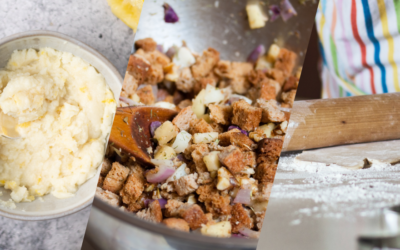
When my father retired he took us all back to Indiana where his roots were as well as my mother’s, and with us came all of those wonderful recipes that had been gathered along the way. Recipes that are now usually reserved for when our far-flung family gathers together to re-connect and find comfort and joy in each other’s company. Our Holiday table does indeed tell the tale of our family’s history, for along with the turkey and trimmings you are liable to see a lasagna made the way my mother’s friends did back in the Dundalk section of Balmer. You will see pickled beets and eggs.

Pickled Beetds and Eggs

You will see home-made chicken and noodles my step-mom makes from a recipe held in the family for nearly a hundred years. There will be Chesapeake oyster dressing. There will be sweet corn casserole from my Grandma Hoover’s recipe box that she put together over the course of her lifetime starting when she was a little girl in Pennsylvania Dutch country. And maybe, if he’s in the mood, my father will make an apple pie from scratch with no recipe and he will carve a picture of an apple in the top crust to let you know what deliciousness awaits inside. And always, always there will be the one dish my mother and sister made for me constantly when I was little because I loved it so, and now all these years later my daughter and her cousins all clamor for it too. It’s an incredibly simple, but fantastically satisfying comfort food recipe from Japan called Yakemeshi, and it’s the Japanese take on fried rice. Although we in our family are crazy about noodles and we love our chicken and noodles; it is this simple rice dish that must be served at some point in time when we are all together. This one dish, with its very short list of ingredients, its ease of execution and mysterious power to always leave you wanting more even when its gone, is a symbol of how we are when we gather together. We are all very different, and we don’t share each other’s views on many things, and yet, when we are together we cherish our short time with each other and when we have to part and go our separate ways, we always want a little bit more and look forward to the next time when we gather together at the table to revel in each other’s company and bask in our shared history.

Chef Hoover’s recipe for Yakemeshi

Serves 6-8

1/4 cup Light Vegetable Oil (Safflower is good)

5 cups Cooked Rice

2 cups hamburger

1/2 cup Diced Onion

1/2 cup Diced Celery

1/4 cup Diced carrots

1 teaspoon Minced Garlic

2 Well-Beaten Eggs

1tablespoon Soy Sauce

Preparation

Heat Oil

Stirfry hamburger

Add onion, celery, carrot, garlic.

Stirfry until well blended.

Add Rice

Stirfry

Stir in beaten eggs and soy sauce and cook until eggs set.

Serve hot.

Cooking for Chefs

Recently I had another opportunity to cook for chefs, or rather one guy was a chef and another was a farmer/food advocate. Cooking for chefs and industry people is always a crapshoot because you never know what kind of personality is going to show up at the table. In my experience most diners from our business are gracious and forgiving. Amongst chefs I’ve found there are usually two types; the chef who is grateful just to not to be cooking that night. This chef is usually the unpretentious, omnivorous type who’s just as happy snarfing down a plate of chili dogs as he would be nibbling on Ostrich ceviche with beet root dust. I count myself in this category with a few quirky variations like my habit of taking pictures of each plate set before me – a habit I picked up from my old friend and fellow neurotic, Tim England.

The second type of chef diner is the jaded cook who’s seen it all and either expects you to excite them with the sheer force of your food or they will just concentrate on everything else at the meal except the food. This sort of chef is easily distracted by shiny things like medals and money. I’ve rarely run into this category of chef diner and when I have it’s been local pros from local restaurants. My experiences with this type have not been awful in the soul crushing way that a bad break-up can be, but it hasn’t been a carnival of humor, either. In some ways, having the food you’ve worked hard to produce disdainfully ignored by people you’re trying to please and impress is worse than having one of them jump up and accuse you of being a no-talent clown. Which has happened to me, but at the time, I took exception to the criticism. I may be a clown, but I do possess more than just a little talent. So there.

Anyway, this last meal I prepared was for Chef Bryant Terry, a celebrity vegan chef whose niche is soul food, vegan style. He was on Hope’s campus as keynote speaker/presenter during a two day, all campus symposium focusing on food ethics in America. Another special guest from the industry was Joel Salatin, farmer, author and subject of the seminal book on sustainable food production, “The Omnivore’s Dilemma” by Michael Pollan. Now, I’m not going to lie to you (well, maybe a little), but I literally had not heard of Chef Terry before this, so I had to do some quick research before I went ahead with my planned menu. I was, however, well aware of who Joel Salatin was; I had read the book and was impressed with what he was able to do on his farm. I was charged with composing a menu for and cooking the welcome dinner for these two guests of honor and a group of campus and community dignitaries. The one caveat was that the menu had to be completely Vegan and they wanted a buffet with at least four items. No worries. I set to work, all the while wondering what sort of diner these guests would be.

I composed the menu with a blend of American regional cooking and a few international items. I took a chance and put a recipe for southern style grilled sweet potatoes with pomegranate molasses glaze and balsamic sugared pecans garnish as a tip of the hat to Chef Terry. I just wanted to mess with the chef’s mind a little and do something that wasn’t in his cookbook, but was definitely in his wheelhouse. My homage to Joel Salatin was making sure that at least three quarters of the food came from within a 50 mile radius of my kitchen. Given the time of year and the abundance of agriculture in West Michigan, this was an easy task.

The dinner went smoothly and everyone was pleased with my cooking, but the real test in my mind was what the guests of honor had to say. Shortly after I finished my little talk to the crowd and they were released to go to the buffet, Bryant Terry came to me and asked to have a little bit of everything put in a to-go container as he didn’t have time to eat before his presentation. Not a good sign and I immediately thought that here was a chef who might be a category two: not interested in eating or cooking, but more interested in the politics and money making aspect of food. But my fears were quickly dispelled when he told me he’d had a little taste of the sweet potatoes and the paella and really liked their authentic flavor. He said he looked forward to eating his take away dinner later, even if it might be lukewarm. He made a joke about chefs being used to eating cold food standing up in the kitchen after all the guests had been served. This was good news and score one for me. I didn’t get a chance to see how Mr. Salatin liked his meal but I heard later that he enjoyed it very much. So, in my mind, the meal was now truly a success after having pleased the one chef at the dinner and as a bonus, pleasing an agricultural expert and icon. Later on, as always, I did my own personal post mortem on the event, I gave myself a little pat on the back, then moved on to the next thing. I am so ingrained with the transient nature of our business and the phenomenon of never resting on your laurels that when it came to remembering the details of this event, including the menu itself, I had to dig into our billing archives just to refresh my memory even though it was barely a month ago. But that’s a subject for the next blog post. Until then, kanpai!

The Menu
Spinach Salad with Sirache Carrot Slaw and Thai cilantro vinaigrette
Korean BBQ Portobello Fingers
Grilled Sweet potatoes with pomegranate molasses
Balsamic glazed pecans
Cuban Paella
Pan seared string beans with preserved lemon
Vegan Brownie with espresso glace

Recipe
Korean BBQ Portobello Strips

Serving Size : 4

Amount Measure Ingredient — Preparation Method
16 Ounces Portobello Mushrooms — stemmed, and gills removed
1/4 Cup Tamari Soy Sauce
1/4 Cup Canola Oil
1 Teaspoon White Pepper

For the Sauce:
1/4 Cup Canola Oil
1/4 Cup Toasted Sesame Oil
1/4 Cup Red Chili Bean Paste (kochujang)
1 Teaspoon White Pepper
2 Tablespoons Ginger — skinned and grated
1/4 Cup Black Garlic — minced
2 Tablespoons Sugar
Water — as needed

Whisk together the marinade ingredients and cover the mushrooms for at least 1 hour but preferably over night.

Preheat gas or charcoal broiler to high. A salamander may be used for this also.

In a blender, combine the sauce ingredients until smooth. It should be a milkshake consistency – if too thick add water. Transfer to a pan and heat until warm but not bubbling.

Grill each side of the mushroom for 2 to 3 minutes on high. Be careful not to let it char too much.

Once flipped, brush the top of the mushroom with the sauce, turn over and do the same on the under side. Remove from the broiler and cut into strips.

Toss with any remaining sauce and serve immediately.

Mushrooms can be served over a bed of stir fried bok choy or jasmine rice. Also may be served with a traditional Korean noodle dish called Chop Chae.

+ kochujang and black garlic can be found at Korean or Asian groceries.